Do you know that feeling when you're stressed or anxious, and your chest feels tight, your breathing becomes short and shallow, and you feel like you're constantly on edge?
Well, rather than trying to think our way out of it, we need to work with what's happening in our bodies first.
These simple somatic practices can help us slow down, reconnect with our bodies and encourage a more settled state.
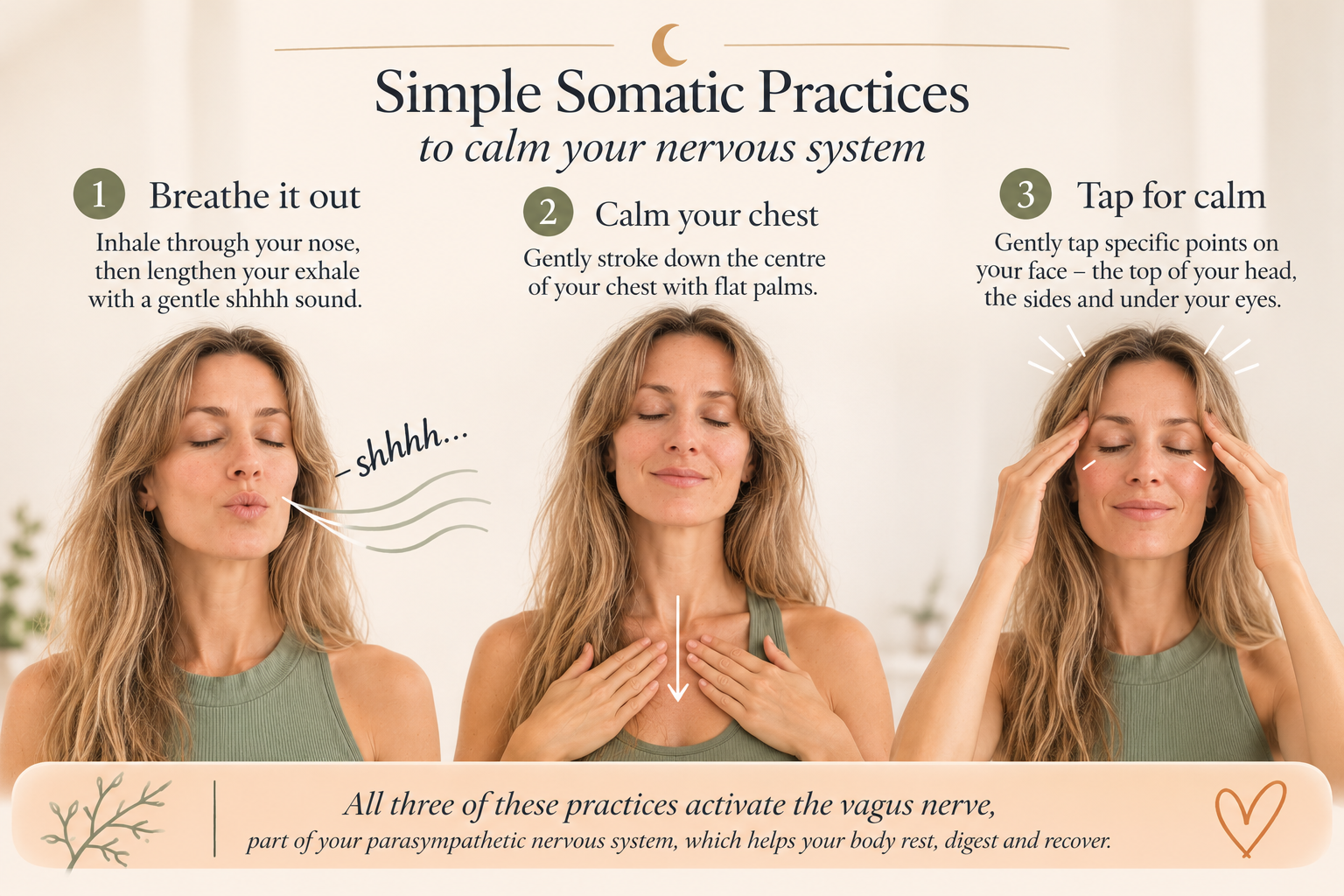
Somatic practices to reduce anxiety
Each of these practices activate the vagus nerve, one of the major nerves involved in our parasympathetic nervous system, which is responsible for helping our bodies rest, digest and recover after periods of stress.
It runs from our brainstem down through our neck and into our chest and abdomen, connecting our brain with many of our major organs, and therefore playing an important role in regulating things like our heart rate and digestion, it's also involved in how our bodies respond to stress. The good news is that these are some simple practices we can incorporate into our everyday lives to support our nervous system and encourage a more relaxed state. We can also do things like going to a slow yoga class, humming, singing, or chanting, and spending time with people who make you feel safe, supported and at ease.
These aren't magic fixes, and you can't simply switch off your stress response by stimulating one nerve but small, consistent practices can help us become more aware of our stress levels, support our body's natural relaxation responses and create more opportunities to slow down and reset.
And just a reminder: Regulation isn't about being calm all the time. It's about developing the ability to move through stress and then return to a more settled state.
